The Birth of the "Girl Friend"
How a runaway bride in a coffee shop established Jennifer Aniston as the ultimate relatable, independently driven star.
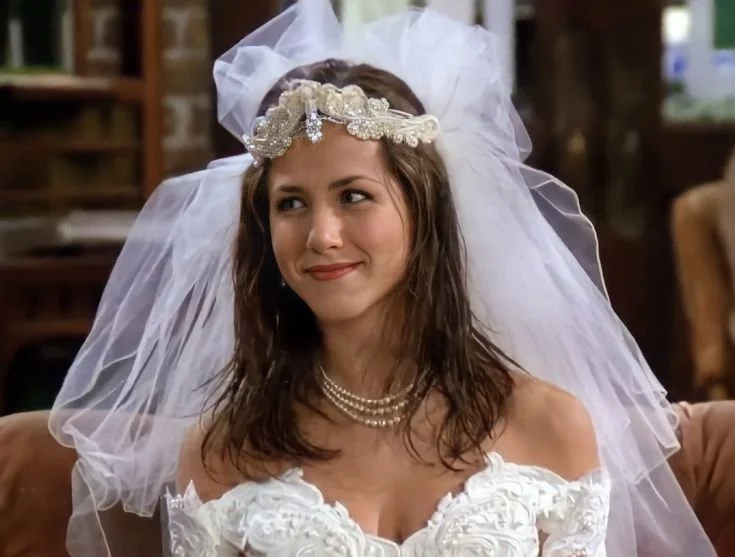
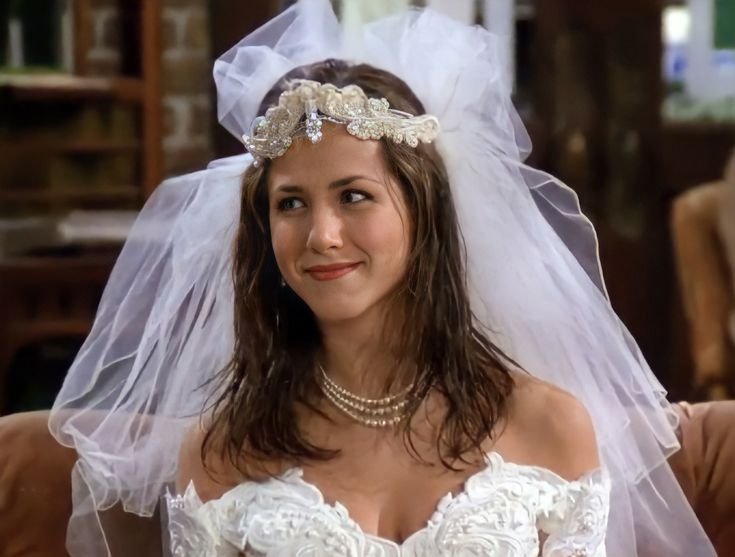
The Arrival of Rachel Green: Jennifer Aniston in her iconic runaway bride wedding dress in the Friends pilot episode (1994).
Introduction
In the landscape of contemporary celebrity, few star texts are as enduring or as deeply scrutinized as Jennifer Aniston’s. To understand the complex cultural discourses surrounding her persona today, we must return to her origins on television. In 1994, Jennifer Aniston debuted as Rachel Green on the NBC sitcom Friends, a defining role that not only launched her career and codified her star image, but ultimately earned her a Primetime Emmy Award for Outstanding Lead Actress in a Comedy Series.
Unlike film stars, who are viewed from a distance and revered as extraordinary, television stars are embedded in the mundane, weekly routines of domestic life. Television’s capacity for complex character development over long periods facilitates an intense, intimate form of audience identification. For ten years, viewers invited Aniston into their living rooms, establishing her as familiar, relatable, and accessible — the quintessential "girl next door."
“The Rachel” and the Culture of Modern Female Empowerment
This accessibility was first physically manifested in "The Rachel," the signature layered haircut Aniston debuted during the show's early seasons. The haircut quickly transcended television, becoming a global consumer phenomenon and serving as an early marker of how her image was tied to style and appearance (Chenot).
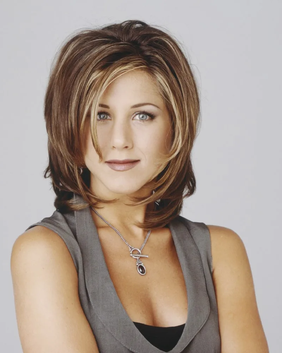
"The Rachel" Phenomenon: Jennifer Aniston sporting her signature layered haircut during the early seasons of Friends.
As the series went on, this focus on style evolved alongside Rachel Green's actual character arc. In girl power narratives, empowerment is often linked to personal expression and professional success. Rachel’s journey directly reflects this idea, as her passion for fashion translates into genuine economic autonomy, taking her from relying on her father's credit cards to becoming a successful executive at Ralph Lauren.
Transitioning to the Big Screen: “The Girl Friend”
As Friends gained global acclaim, Aniston attempted to leverage her television popularity into a film career. The media and academic analyses of her early cinematic transition reveal a strategic leveraging of her established persona (Chenot).
From TV Star to Hollywood Leading Lady: The official trailer for Picture Perfect (1997), Aniston's first major studio rom-com lead. As Chenot notes, this film marked a strategic shift in her star image, allowing her to transition into an erotic icon while preserving the accessible, aspirational "Girl Friend" charm that made her a household name on television.
As explored in the journal article From Friends to “The Girl Friend”: the Early Evolution of Jennifer Aniston’s Star Image, she transitioned into an erotic icon while carefully maintaining her relatable charm. She became the "Girl Friend,'‘ a term used by Chenot to describe her dual appeal to both male and female audiences. For male viewers, she was the beautiful, desirable romantic prospect. For female viewers, she was the aspirational, stylish gal pal. Her early film roles in the late 1990s and early 2000s (e.g., Picture Perfect) heavily relied on this established TV persona, allowing her to complexify her image as a romantic comedy heroine without alienating the audience that felt they "knew" Rachel Green (Chenot).
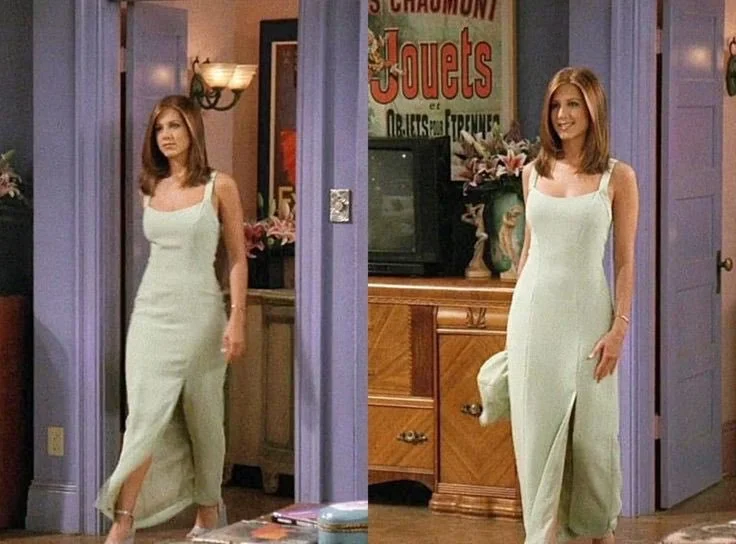
Erotic Icon and Fashion Standard: Rachel Green in her iconic green dress from Season 3 of Friends, where she famously decides to “go commando,” sending both Ross and fans into a frenzy. This scene is an example of how Rachel set the balance between her “youthful sexual playfulness” and “sophisticated womanliness.” (Chenot)
The “Tragic Spinster” vs. The Hollywood A-Lister
How the popular press utilized Jennifer Aniston to police postfeminist temporality, even as she dominated the box office.
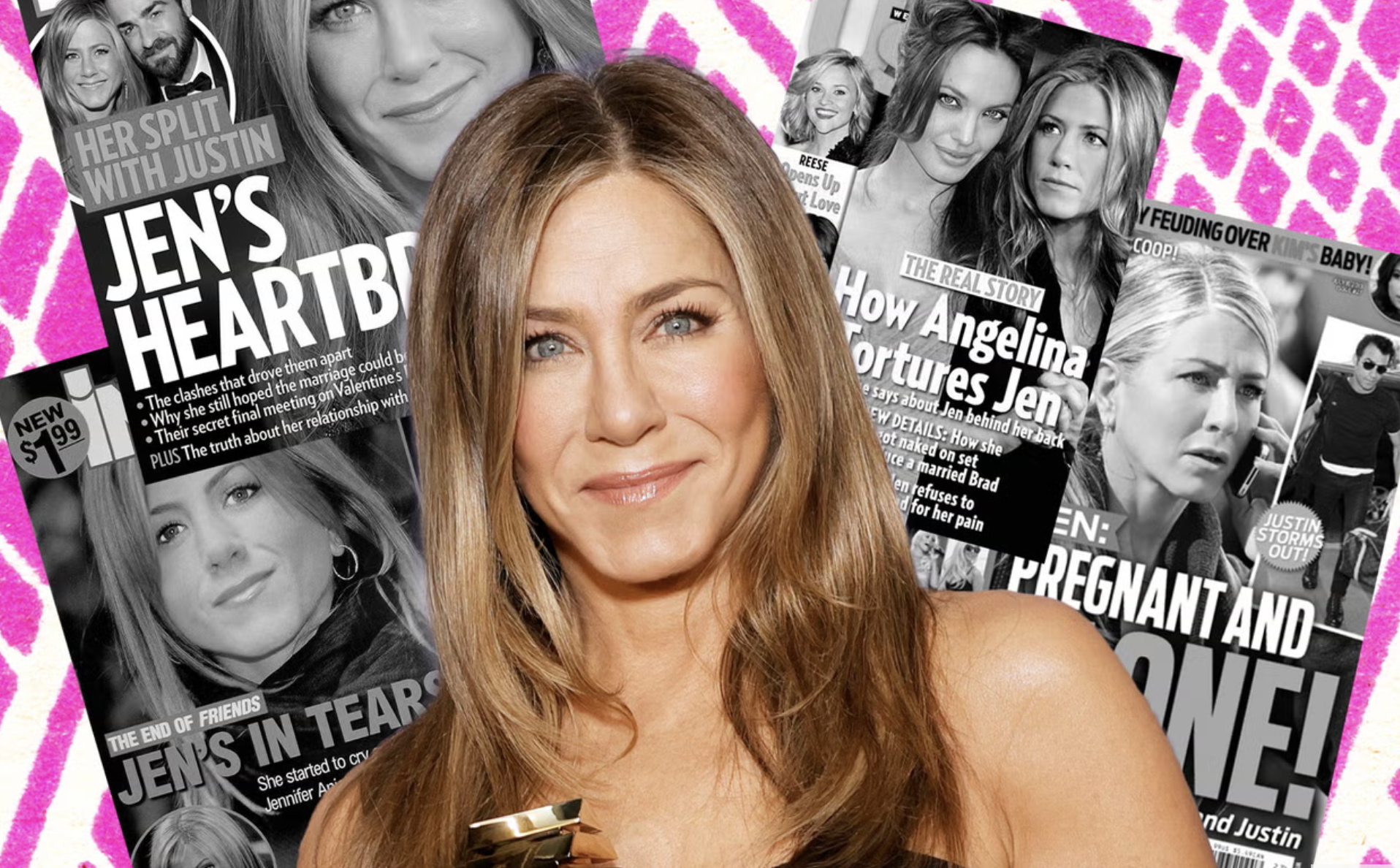
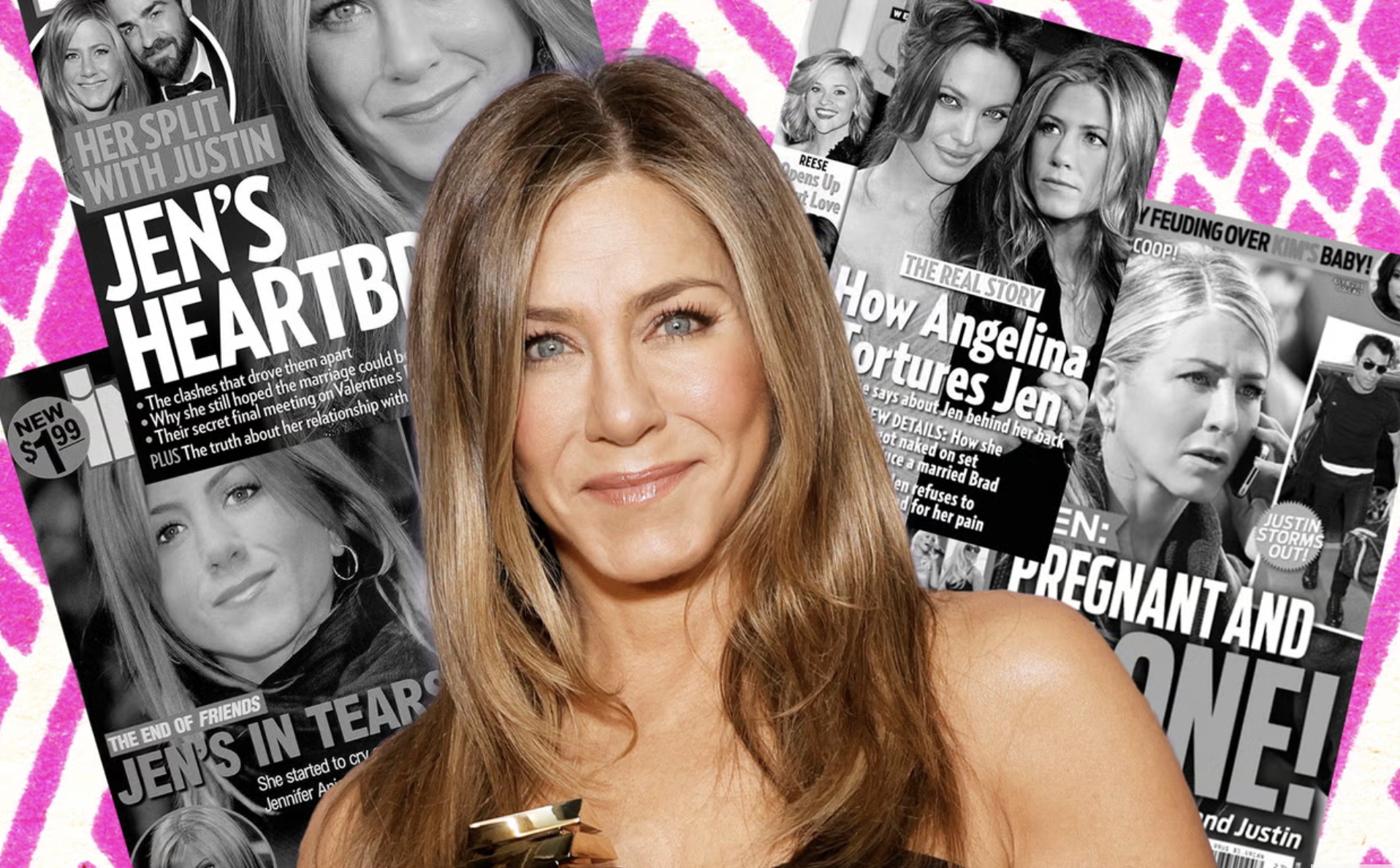
Policing the Female Star: Tabloid headlines aggressively speculating on Aniston's marital status, fertility, and emotional state. As media scholar Susan Berridge notes, gossip outlets weaponized her relatable star text to police her life choices and enforce postfeminist expectations of marriage and motherhood.
The Shift from “Girl Friend” to Tabloid Fixture
Following her highly publicized divorce from Brad Pitt in 2005, Jennifer Aniston’s star image underwent an aggressive reconstruction by the tabloid media. The profound audience intimacy established during her television years had a dark underside: it fostered a sense of public entitlement to her private life. The relatable framework that endeared her to millions as Rachel Green was essentially weaponized. Instead of the aspirational “girl next door,” the press began to frame her as a cautionary tale of female unfulfillment. As mass media increasingly obsessed over celebrity pregnancies, entertainment journalism was quick to prey on women without children, utilizing their childless status as cautionary examples for readers. Child-free celebrities are overwhelmingly framed in pop culture as undesirable, meant to be either scorned or pitied. For Aniston, this resulted in an era that perfectly exemplifies narrative splitting: the stark divergence between a manufactured, highly scrutinized media persona and an actual, thriving professional reality.
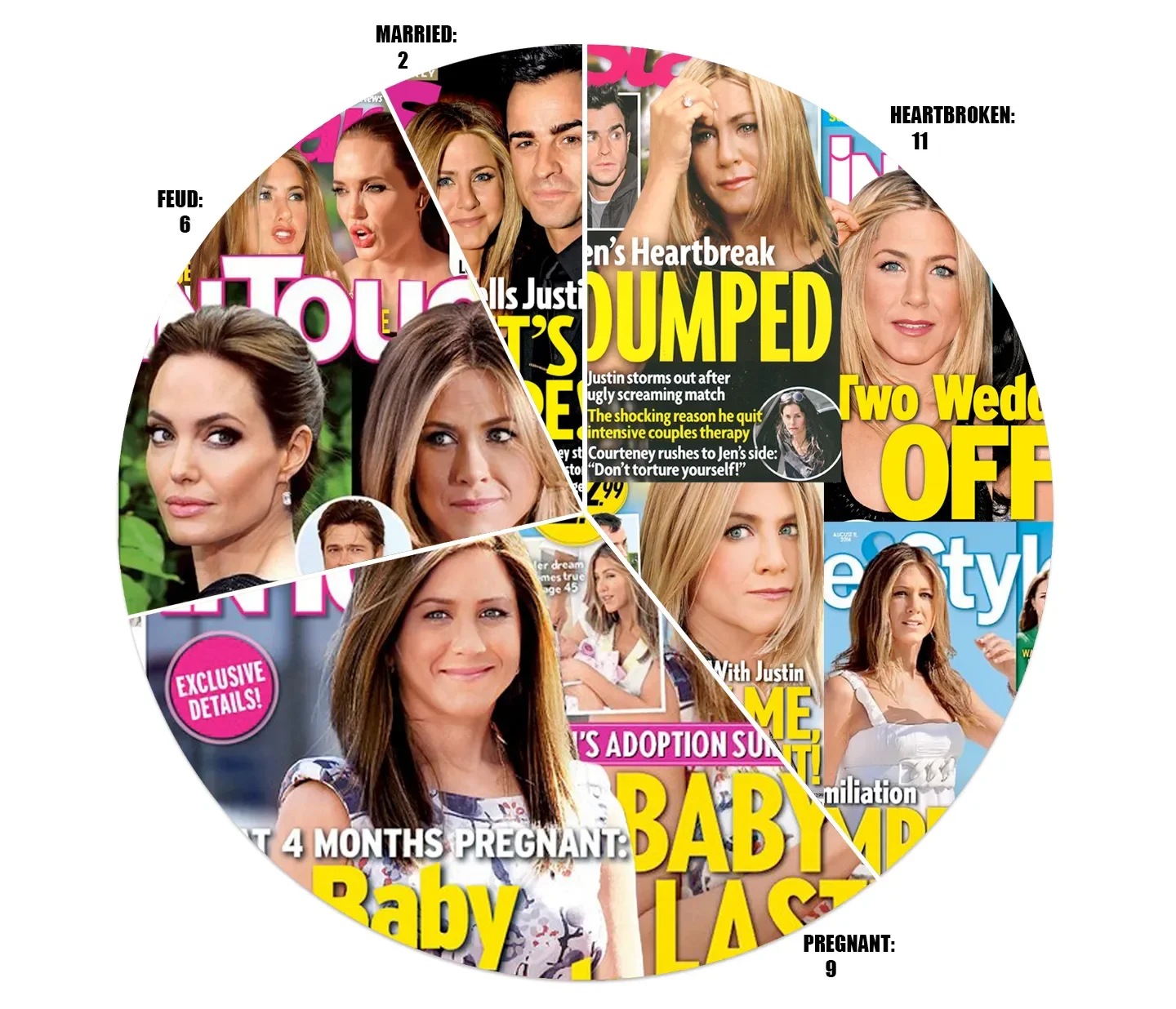
Tabloid Culture: Examples of tabloid cover stories surrounding Jennifer Aniston, illustrating the media's obsession with her personal life through persistent narratives of heartbreak and pregnancy.
Postfeminist Temporality and Temporal Panic
To understand this media scrutiny, we can look to what scholar Diane Negra calls "postfeminist temporality,” i.e., the expectation that female celebrities must achieve milestones like marriage and motherhood by a certain age. When a star misses these culturally enforced deadlines, the media responds with "temporal panic," framing her choices as a personal failure (Negra; Rodgers).
In Aniston’s case, tabloids policed her timeline by casting her as a tragic, lonely figure and using sensationalist language to project sadness onto her life. This judgment was also heavily gendered. While Aniston was routinely held accountable for her single and childless status, male partners like Brad Pitt and Justin Theroux faced no comparable public pressure regarding fatherhood or family timelines (Rodgers).
Defying the Narrative Through Commercial Success
However, a critical analysis of her star text during this period reveals a fascinating contradiction. While the tabloids worked overtime to construct a narrative of personal failure, her actual career stood in stark defiance of this framing. During this era of intense scrutiny, Aniston maintained absolute box-office dominance as one of Hollywood's highest-paid actresses. She consistently commanded multi-million-dollar salaries and anchored commercially lucrative comedies, including The Break-Up (2006), Marley & Me (2008), Just Go with It (2011) and We're the Millers (2013), all of which generated hundreds of millions in global revenue.
Simultaneously, she expanded her acting portfolio, earning critical praise for raw, unglamorous dramatic roles in independent films such as The Good Girl (2002) and Cake (2014). In many ways, these dramatic roles allowed her to channel and subvert the very sadness the media tried to project onto her personal life. Ultimately, this era underscores the punitive nature of celebrity media towards women who deviate from normative scripts, yet her enduring bankability proved that her connection with her audience remained unbreakable.
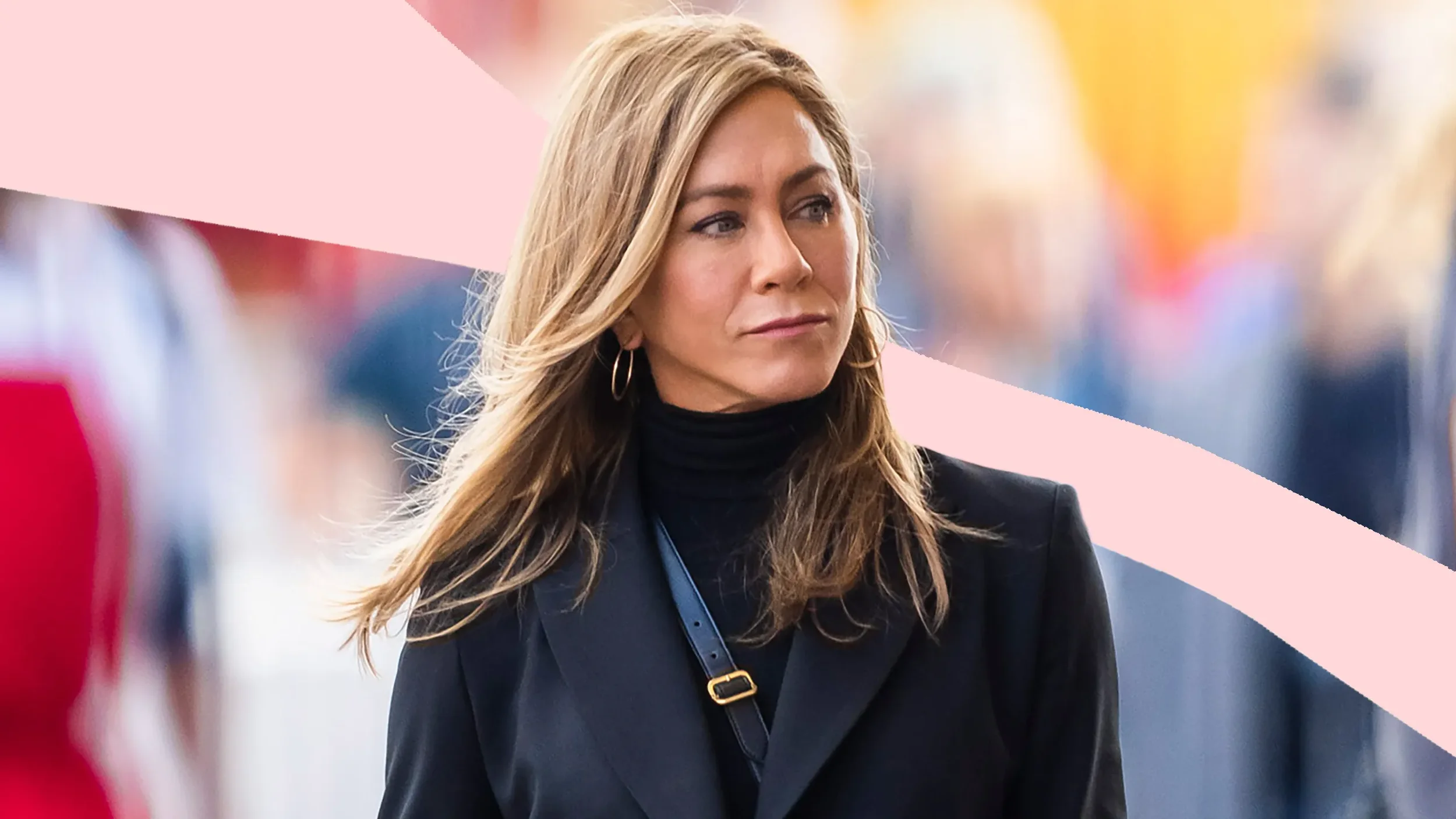
The Taboo of the Non-Mother
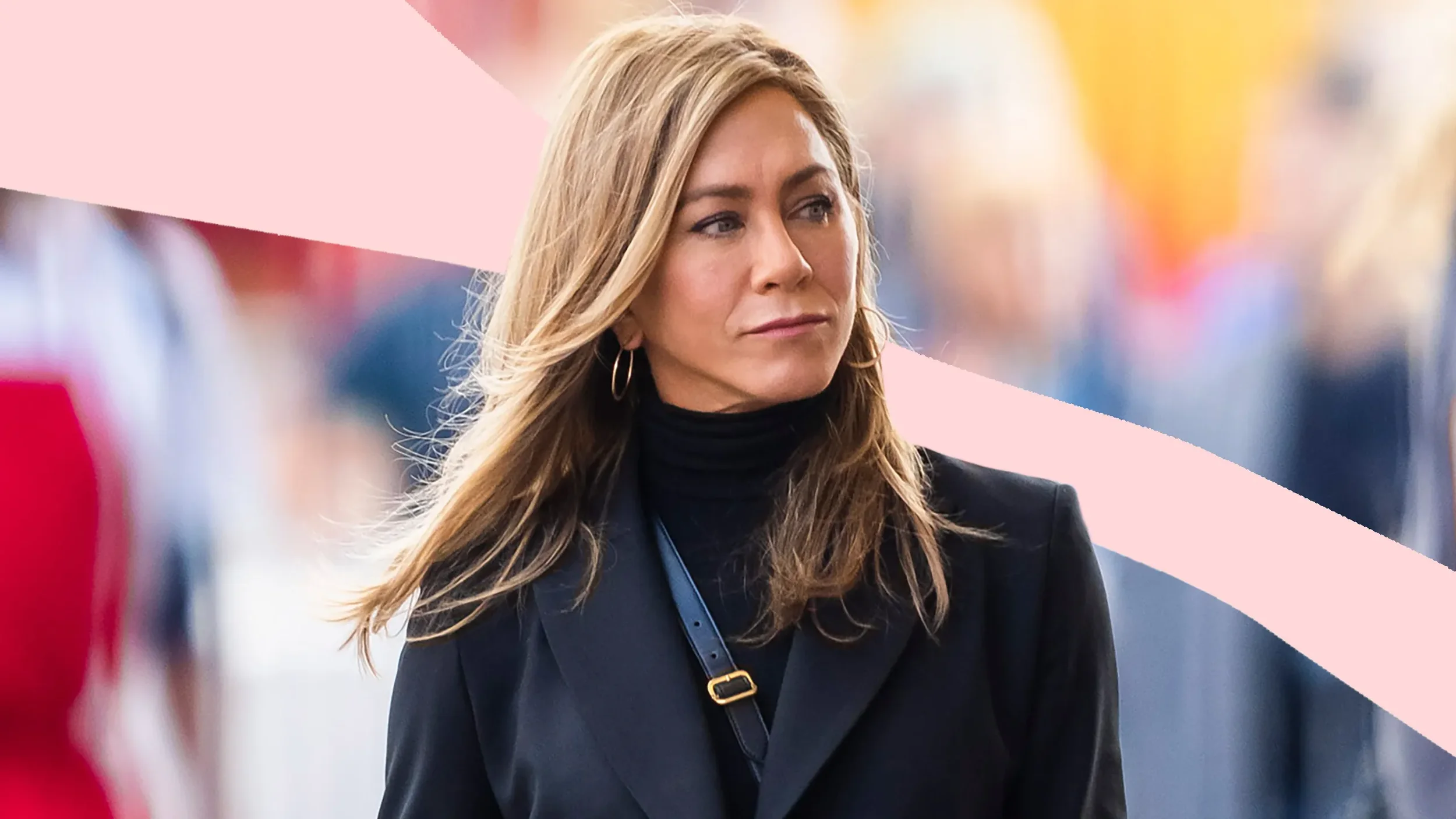
How Jennifer Aniston challenged media obsession and redefined the cultural value of child-free women.
Pronatalism and the Concept of “Lack”
In the 21st century, motherhood continues to be heavily promoted as a biological and moral imperative due to the inescapable cultural force of pronatalism. In Interrogating Non-Motherhood through the Star Text of Jennifer Aniston, Julie Rodgers and Laura Carroll note that contemporary society insists no woman is truly complete or fulfilled unless she has children, an ideology that treats non-motherhood as the ultimate deviation from a normal life trajectory. As Aniston's star text evolved, she became emblematic of this societal discomfort, as the media continually reduced her childless status to a state that evoked fear, panic, and even disdain.
The 2016 Huffington Post Essay
After enduring more than a decade of invasive speculation, Aniston forcefully reclaimed her agency in a 2016 open letter for the Huffington Post, titled “For the Record.” Opening with the unequivocal declaration, “For The Record, I Am Not Pregnant. What I Am Is Fed Up,” she utilized her massive platform to critique the media's relentless objectification of women's bodies.
“We are complete with or without a mate, with or without a child. We get to decide for ourselves what is beautiful when it comes to our bodies.”
Aniston condemned the “warped way we calculate a woman's worth” based solely on marriage and maternity, pushing back against the societal expectation that women without children are somehow incomplete or unsuccessful. By asserting that "we are complete with or without a mate, with or without a child," she effectively subverted the dominant narrative of “lack” typically assigned to the non-mother. Her essay resonated globally, transforming her into an empowering spokesperson for women navigating life outside traditional reproductive timelines.
A Continuum of Non-Motherhood
Crucially, Aniston’s star text dismantles the rigid binary that often categorizes childlessness as either strictly voluntary (framed as selfish) or involuntary (framed as tragic). As Rodgers highlights, Aniston's evolution, from fiercely defending the child-free choice in 2016 to later revealing her private IVF struggles in a 2022 Allure interview, demonstrates that non-motherhood is a fluid, multifaceted continuum.
“All the years and years and years of speculation... It was really hard. I was going through IVF, drinking Chinese teas, you name it. I was throwing everything at it. I would’ve given anything if someone had said to me, ‘Freeze your eggs. Do yourself a favor.’ You just don’t think it. So here I am today. The ship has sailed.”
Simultaneously occupying both positions over the course of her life does not negate her advocacy for reproductive autonomy. Instead, it challenges audiences to view non-motherhood not as a monolithic experience of failure, but as a deeply personal journey filled with complexities, ultimately staking a vital claim for women's bodily autonomy and self-sovereignty.
The Executive Producer and Entrepreneur
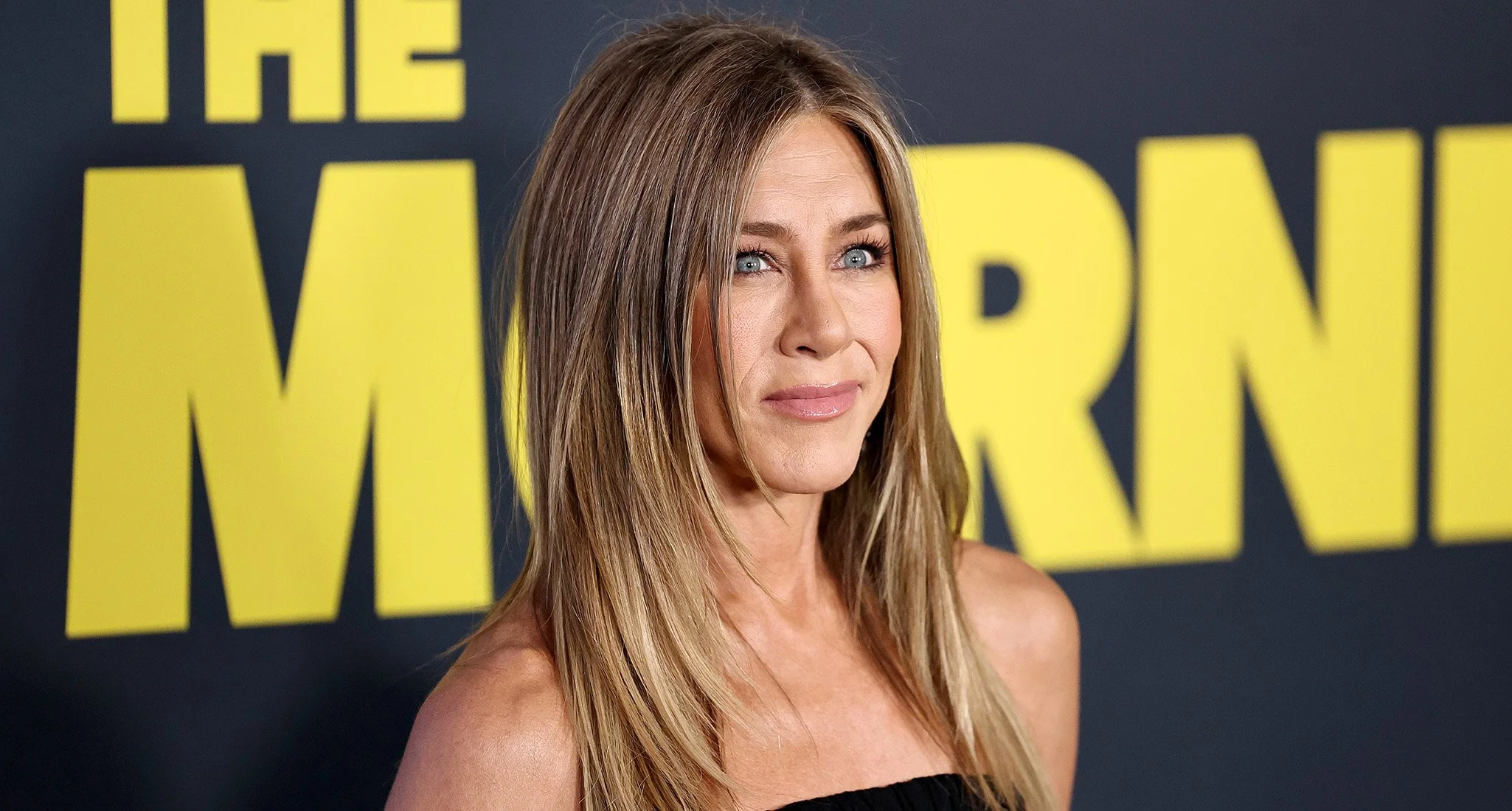
Reclaiming the Narrative: Moving from the scrutinized subject to the storyteller through production and business ventures.
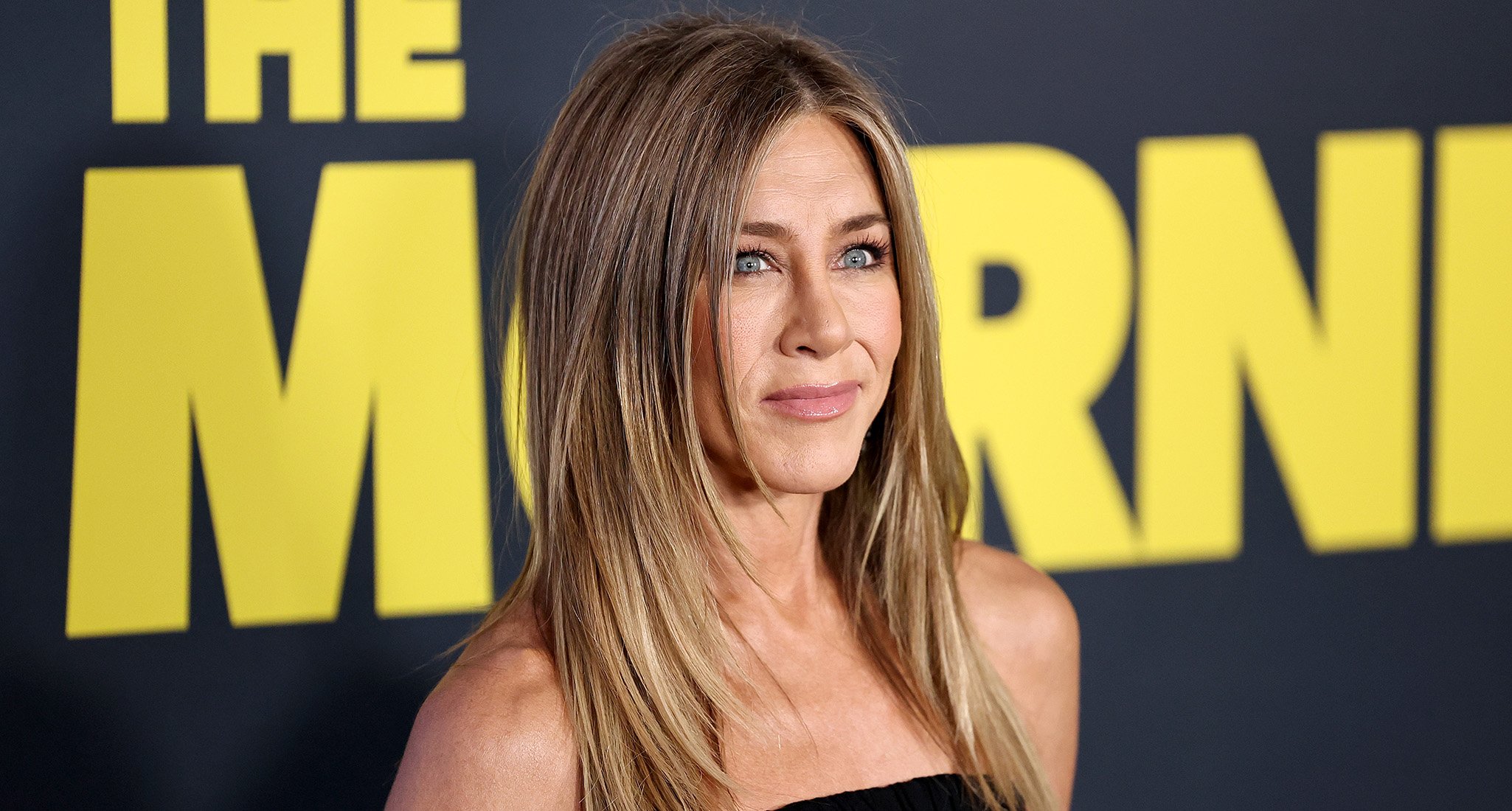
The Executive Producer: Jennifer Aniston at the premiere of Apple TV+’s The Morning Show (2019).
Taking Control Behind the Camera
Throughout her career, Jennifer Aniston has steadily evolved from being the passive object of media scrutiny to an active architect of her own professional destiny. This shift is most visible in her return to television as the star and executive producer of Apple TV+'s The Morning Show (2019-present). By stepping into an executive production role, Aniston took direct control over the stories being told, using her platform to tackle complex contemporary issues like workplace power dynamics.
Building the Brands: Echo Films and LolaVie
This behind-the-scenes agency extends far beyond acting and producing prestige television. Aniston expanded her cultural and economic power by establishing her own production company, Echo Films, and launching the haircare brand LolaVie. This venture marks an apt full-circle moment: decades after "The Rachel" haircut made her hair an obsessive global commodity for the public and the beauty industry, Aniston finally harnessed that aesthetic capital on her own terms. Through LolaVie, she transformed a lifelong association with hair into a profitable, self-directed enterprise.
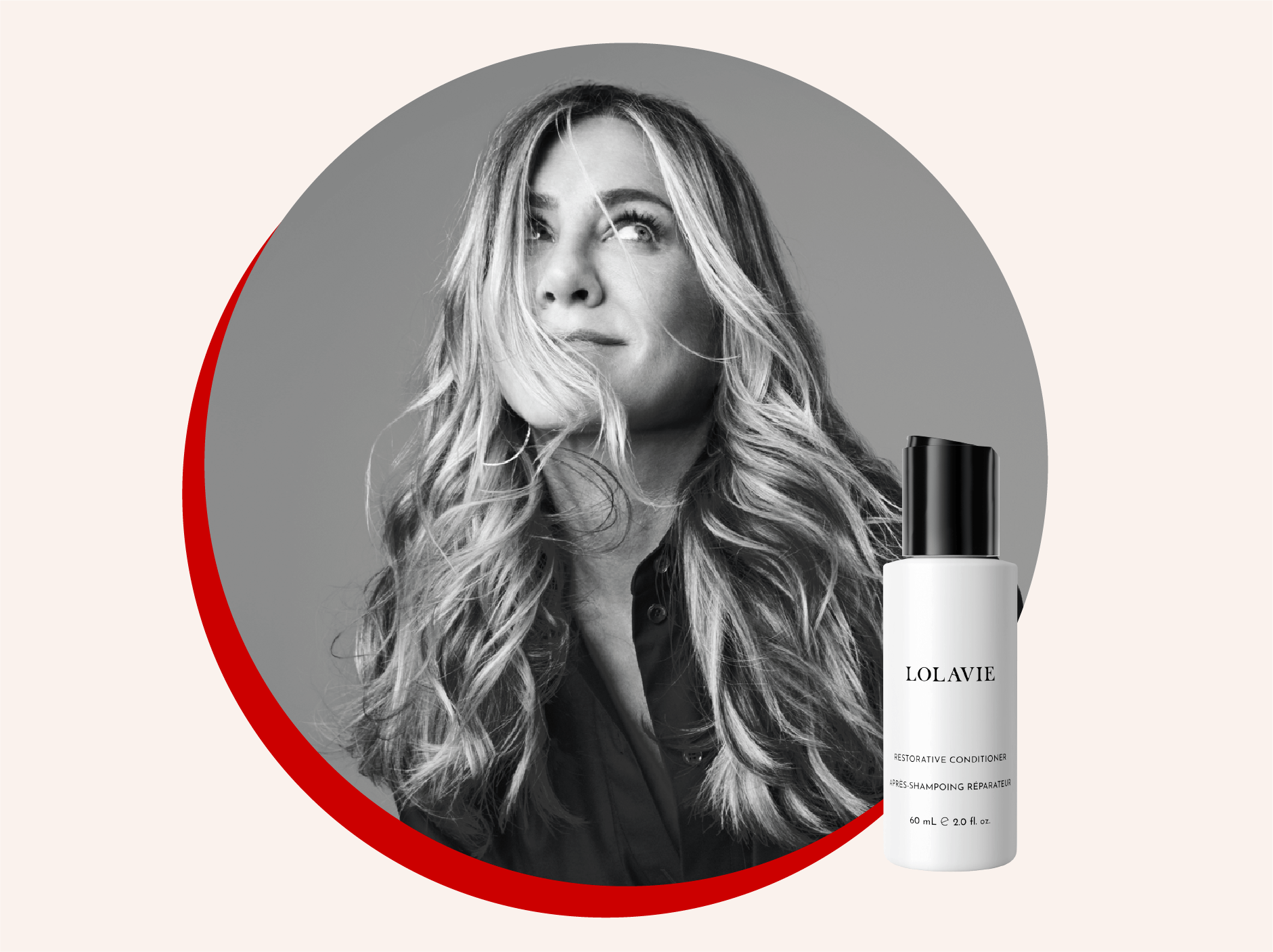
Full-Circle Moment: Ad image for LolaVie, Jennifer Aniston’s haircare brand, showing how she turned her famous hair-centric star image into a successful, founder-led business venture.
The Ultimate Star Text Reclamation
Ultimately, Aniston’s transition into a media mogul and producer represents the ultimate reclamation of her star text. She no longer merely inhabits the roles written for her by others. This time, she is the one curating the narratives. By mastering both production and entrepreneurship, Aniston has transformed decades of intense public scrutiny into enduring, self-directed professional autonomy, proving that her cultural longevity stems just as much from her business acumen as it does from her iconic performances.