The Birth of the "Girl Friend"
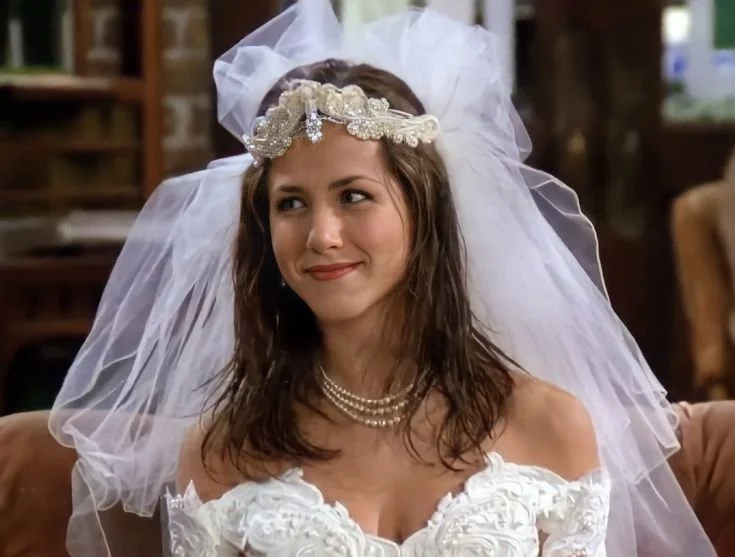
The Arrival of Rachel Green: Jennifer Aniston in her iconic runaway bride wedding dress in the Friends pilot episode (1994).
Introduction
In the landscape of contemporary celebrity, few star texts are as enduring or as deeply scrutinized as Jennifer Aniston’s. To understand the complex cultural discourses surrounding her persona today, we must return to her origins on television. In 1994, Jennifer Aniston debuted as Rachel Green on the NBC sitcom Friends, a defining role that not only launched her career and codified her star image, but ultimately earned her a Primetime Emmy Award for Outstanding Lead Actress in a Comedy Series.
Unlike film stars, who are viewed from a distance and revered as extraordinary, television stars are embedded in the mundane, weekly routines of domestic life. Television’s capacity for complex character development over long periods facilitates an intense, intimate form of audience identification. For ten years, viewers invited Aniston into their living rooms, establishing her as familiar, relatable, and accessible — the quintessential "girl next door."
“The Rachel” and the Culture of Modern Female Empowerment
This accessibility was first physically manifested in "The Rachel," the signature layered haircut Aniston debuted during the show's early seasons. The haircut quickly transcended television, becoming a global consumer phenomenon and serving as an early marker of how her image was tied to style and appearance (Chenot).
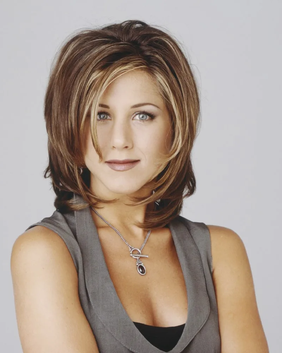
"The Rachel" Phenomenon: Jennifer Aniston sporting her signature layered haircut during the early seasons of Friends.
As the series went on, this focus on style evolved alongside Rachel Green's actual character arc. In girl power narratives, empowerment is often linked to personal expression and professional success. Rachel’s journey directly reflects this idea, as her passion for fashion translates into genuine economic autonomy, taking her from relying on her father's credit cards to becoming a successful executive at Ralph Lauren.
Transitioning to the Big Screen: “The Girl Friend”
As Friends gained global acclaim, Aniston attempted to leverage her television popularity into a film career. The media and academic analyses of her early cinematic transition reveal a strategic leveraging of her established persona (Chenot).
From TV Star to Hollywood Leading Lady: The official trailer for Picture Perfect (1997), Aniston's first major studio rom-com lead. As Chenot notes, this film marked a strategic shift in her star image, allowing her to transition into an erotic icon while preserving the accessible, aspirational "Girl Friend" charm that made her a household name on television.
As explored in the journal article From Friends to “The Girl Friend”: the Early Evolution of Jennifer Aniston’s Star Image, she transitioned into an erotic icon while carefully maintaining her relatable charm. She became the "Girl Friend,'‘ a term used by Chenot to describe her dual appeal to both male and female audiences. For male viewers, she was the beautiful, desirable romantic prospect. For female viewers, she was the aspirational, stylish gal pal. Her early film roles in the late 1990s and early 2000s (e.g., Picture Perfect) heavily relied on this established TV persona, allowing her to complexify her image as a romantic comedy heroine without alienating the audience that felt they "knew" Rachel Green (Chenot).
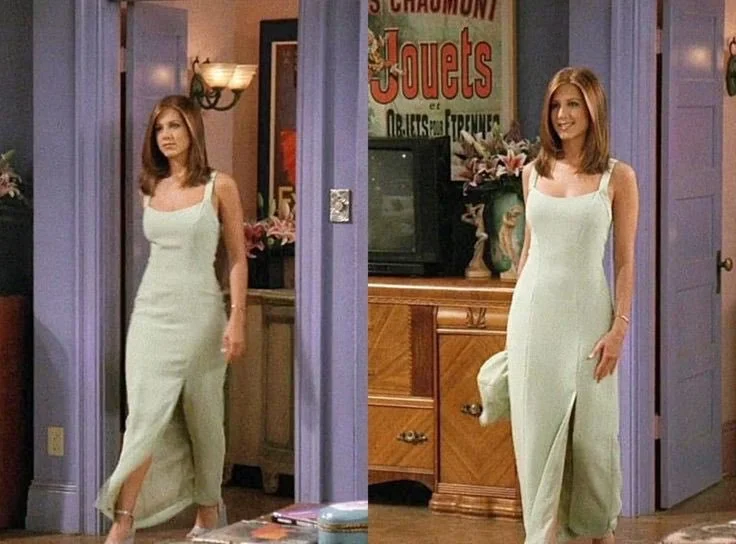
Erotic Icon and Fashion Standard: Rachel Green in her iconic green dress from Season 3 of Friends, where she famously decides to “go commando,” sending both Ross and fans into a frenzy. This scene is an example of how Rachel set the balance between her “youthful sexual playfulness” and “sophisticated womanliness.” (Chenot)
