The “Tragic Spinster” vs. The Hollywood A-Lister
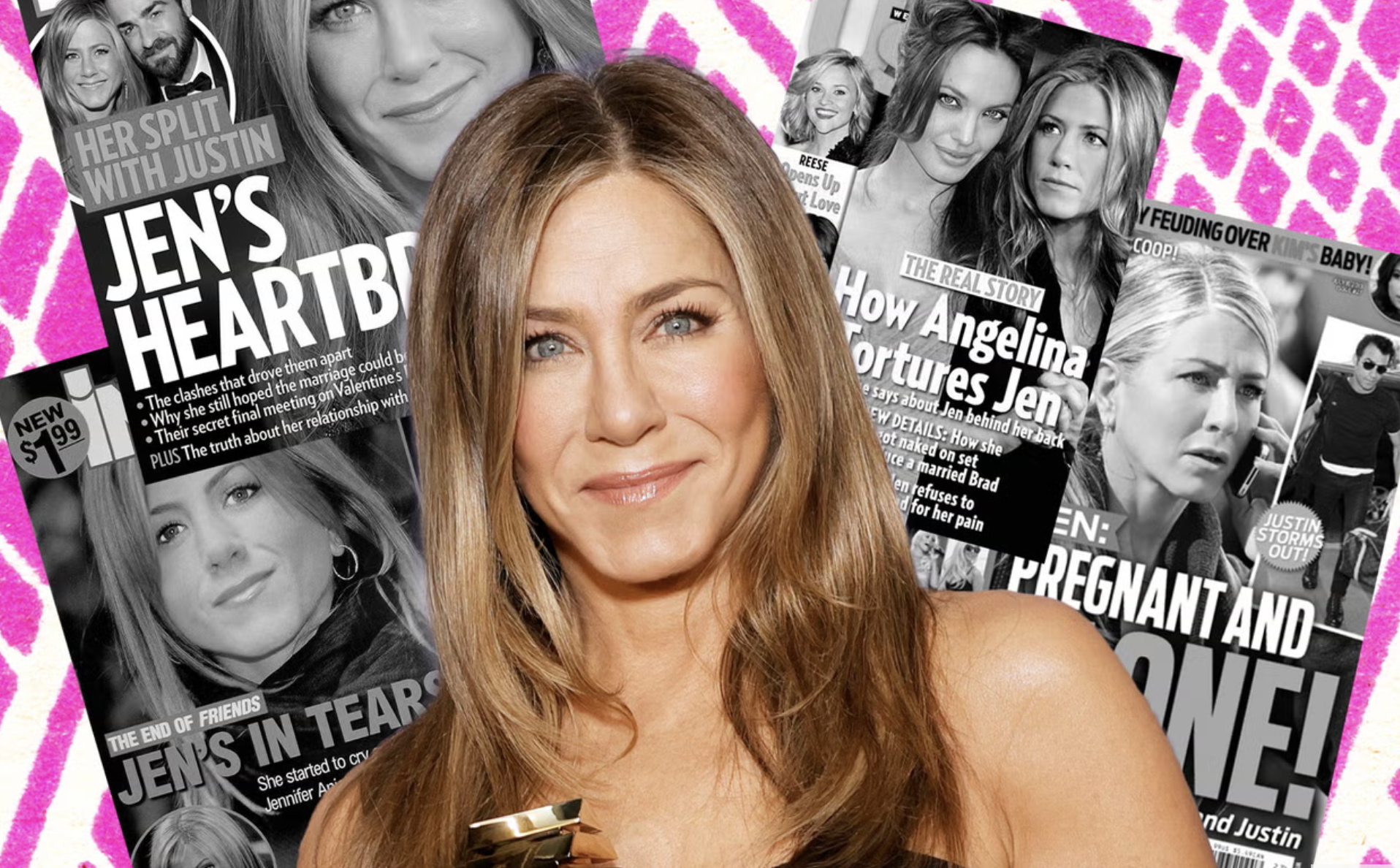
Policing the Female Star: Tabloid headlines aggressively speculating on Aniston's marital status, fertility, and emotional state. As media scholar Susan Berridge notes, gossip outlets weaponized her relatable star text to police her life choices and enforce postfeminist expectations of marriage and motherhood.
The Shift from “Girl Friend” to Tabloid Fixture
Following her highly publicized divorce from Brad Pitt in 2005, Jennifer Aniston’s star image underwent an aggressive reconstruction by the tabloid media. The profound audience intimacy established during her television years had a dark underside: it fostered a sense of public entitlement to her private life. The relatable framework that endeared her to millions as Rachel Green was essentially weaponized. Instead of the aspirational “girl next door,” the press began to frame her as a cautionary tale of female unfulfillment. As mass media increasingly obsessed over celebrity pregnancies, entertainment journalism was quick to prey on women without children, utilizing their childless status as cautionary examples for readers. Child-free celebrities are overwhelmingly framed in pop culture as undesirable, meant to be either scorned or pitied. For Aniston, this resulted in an era that perfectly exemplifies narrative splitting: the stark divergence between a manufactured, highly scrutinized media persona and an actual, thriving professional reality.
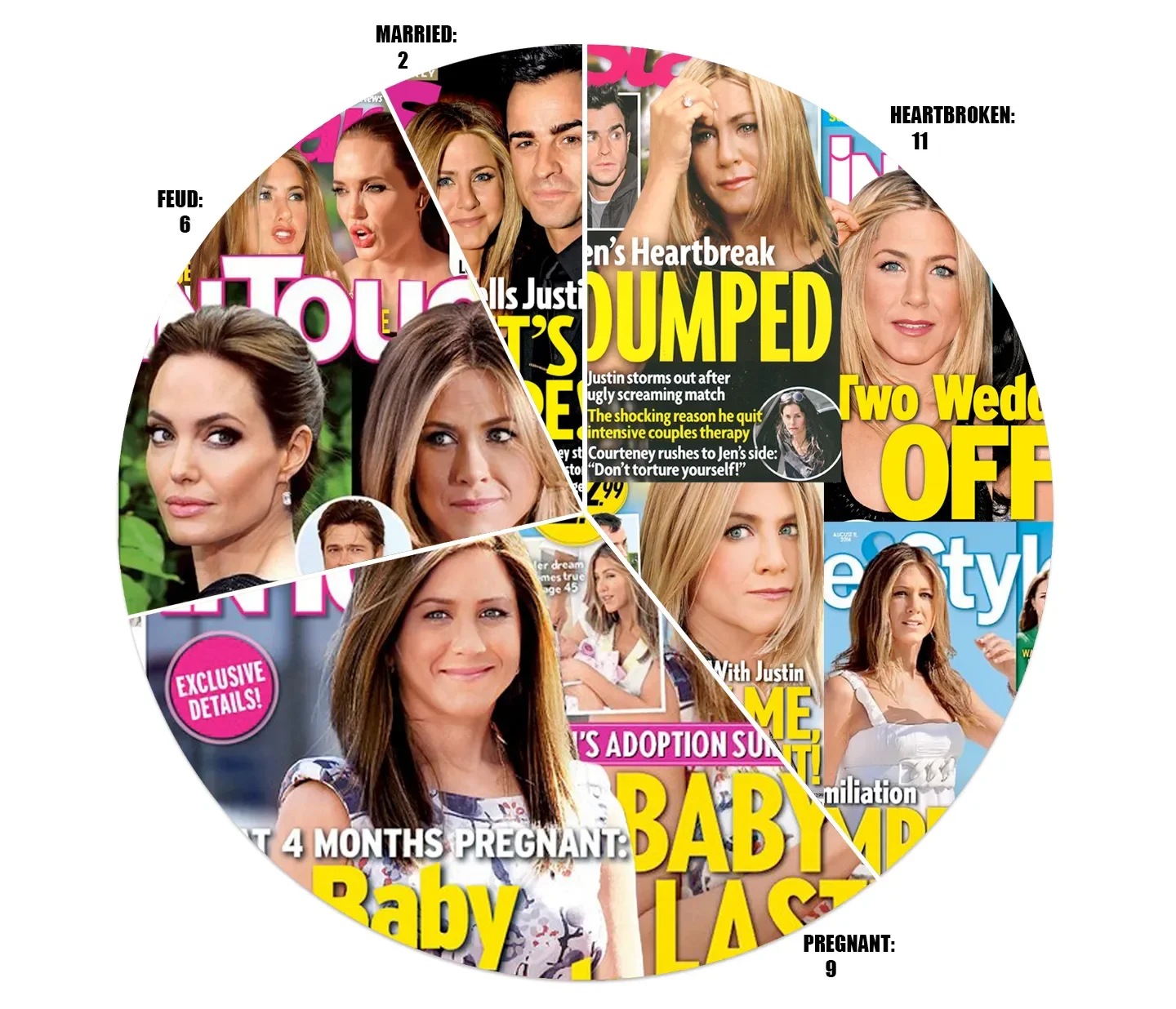
Tabloid Culture: Examples of tabloid cover stories surrounding Jennifer Aniston, illustrating the media's obsession with her personal life through persistent narratives of heartbreak and pregnancy.
Postfeminist Temporality and Temporal Panic
To understand this media scrutiny, we can look to what scholar Diane Negra calls "postfeminist temporality,” i.e., the expectation that female celebrities must achieve milestones like marriage and motherhood by a certain age. When a star misses these culturally enforced deadlines, the media responds with "temporal panic," framing her choices as a personal failure (Negra; Rodgers).
In Aniston’s case, tabloids policed her timeline by casting her as a tragic, lonely figure and using sensationalist language to project sadness onto her life. This judgment was also heavily gendered. While Aniston was routinely held accountable for her single and childless status, male partners like Brad Pitt and Justin Theroux faced no comparable public pressure regarding fatherhood or family timelines (Rodgers).
Defying the Narrative Through Commercial Success
However, a critical analysis of her star text during this period reveals a fascinating contradiction. While the tabloids worked overtime to construct a narrative of personal failure, her actual career stood in stark defiance of this framing. During this era of intense scrutiny, Aniston maintained absolute box-office dominance as one of Hollywood's highest-paid actresses. She consistently commanded multi-million-dollar salaries and anchored commercially lucrative comedies, including The Break-Up (2006), Marley & Me (2008), Just Go with It (2011) and We're the Millers (2013), all of which generated hundreds of millions in global revenue.
Simultaneously, she expanded her acting portfolio, earning critical praise for raw, unglamorous dramatic roles in independent films such as The Good Girl (2002) and Cake (2014). In many ways, these dramatic roles allowed her to channel and subvert the very sadness the media tried to project onto her personal life. Ultimately, this era underscores the punitive nature of celebrity media towards women who deviate from normative scripts, yet her enduring bankability proved that her connection with her audience remained unbreakable.
